



The goal
In Cribbage two players race to one hundred and twenty-one points. You score while playing cards to a running count, and again when you count your hand at the show.
The deal
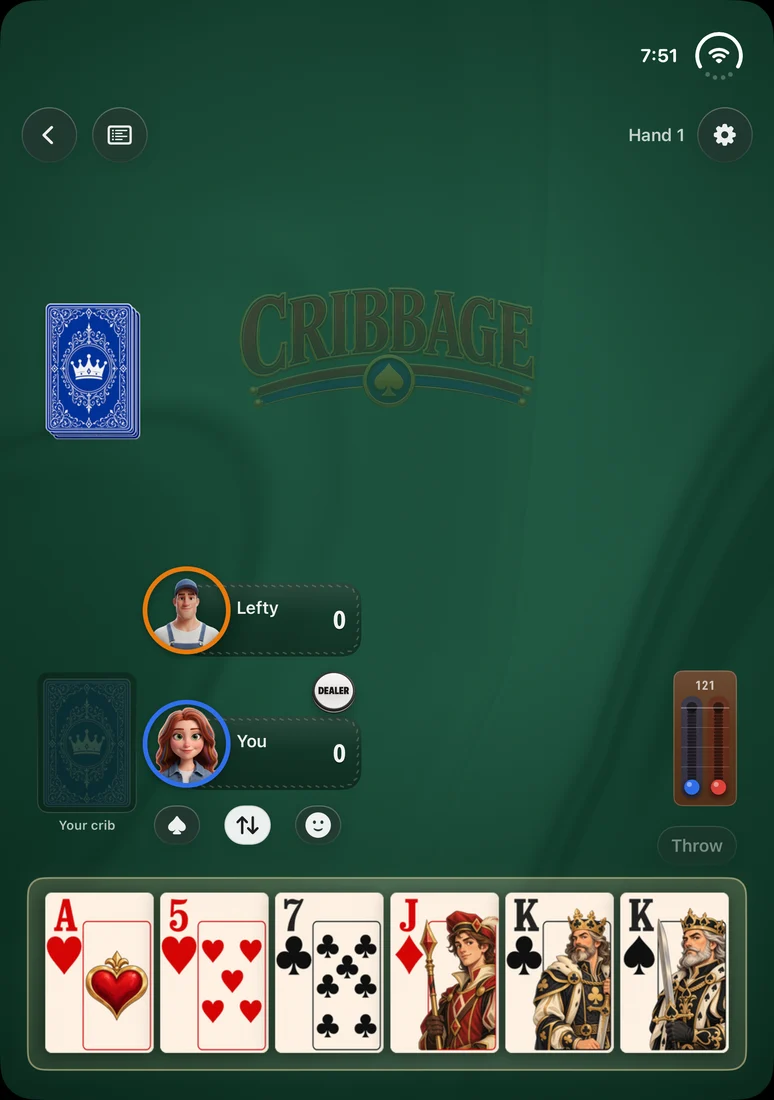
Six cards each. You each put two into the crib, which belongs to the dealer. A cut decides who deals first. After that the deal alternates every hand, so the crib is yours every other hand. So throw with the crib in mind: fives and pairs help whoever owns it. Give them to your own crib and keep them out of your opponent's.
One more card is cut and turned up as the starter. It counts for both hands and for the crib. If the starter is a jack, the dealer takes two points at once, which can even win the game before a card is played.
The play
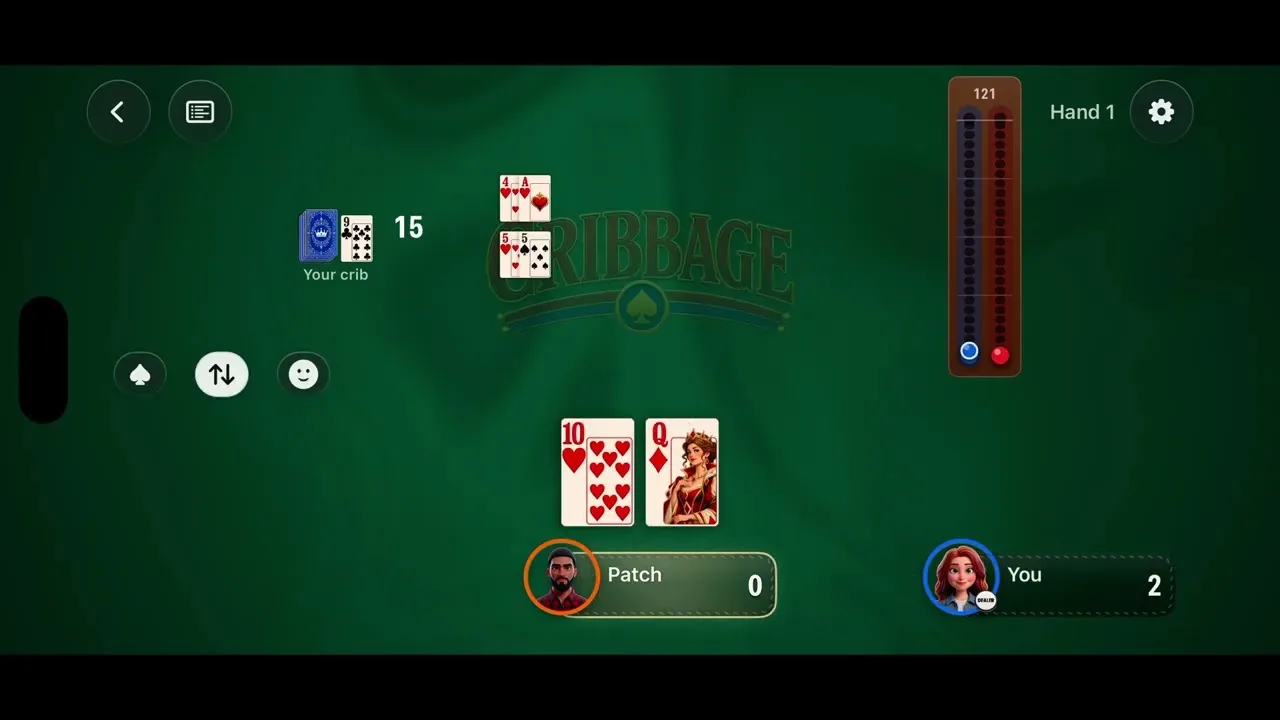
Take turns laying cards face up, adding their values to a running count. Face cards count ten and an ace one. Bring the count to exactly fifteen or exactly thirty-one and score two. Thirty-one wipes the count, and the other player starts the next one. The dealer's opponent lays the first card. Whoever lays the very last card of the play scores one, unless it made thirty-one.
Match the rank just played for two, a third of that rank for six, a fourth for twelve. Complete a run of three or more and score one per card, in any order: a six laid on a seven and a five makes a run. A repeated rank breaks it, and the ace is always low.
You must play whenever a card keeps the count at thirty-one or under. Only when none does do you say go. After a go, the other player keeps laying cards while they fit, and you say go again each time the turn comes back. When neither can play, the last to have played scores one, the count resets, and the other player starts it.
Lead a four or lower when you can: no single card can then bring the count to fifteen. Try not to leave the count on five or twenty-one, where one ten-card makes fifteen or thirty-one for your opponent.
Scoring
When the cards run out, each hand is scored with the starter added. The non-dealer counts first, then the dealer, then the crib. Every combination adding to fifteen scores two, and they all count. Every pair is two.
Each five with the ten is fifteen, each five with the jack is fifteen, and the three fives together make one more. Three fives are three pairs.
A run of three or more is one per card. Four kept cards of one suit are a flush for four, or five if the starter matches too. The starter cannot make a flush out of three. Holding the jack of the starter's suit is one point, called nobs. The crib only scores a flush if all five match.
A repeated rank doubles a run. Five, five, six, seven is two runs of three for six points, and the pair of fives still scores two. Three of one rank triples the run, nine points, and two pairs inside one run make it four runs, twelve points. The pairs score on top.
Winning
The first to a hundred and twenty-one wins, and the game stops the moment you reach it. That can happen in the middle of the show. Hands not yet counted are never counted at all. Every point is counted for you, and you only need to reach 121, not land on it exactly.
Win before your opponent reaches ninety-one and it is a skunk; before sixty-one, a double skunk. A skunk earns the winner extra prestige. If a player's connection drops, the table waits a minute for them. If they do not return, the match ends for both: the hand in play is dropped, and every point already pegged stands.