


The goal
In Spades you and the seat across from you are partners. Your side tries to reach five hundred points first. Points come from tricks. Before every hand your side promises how many tricks it will take.
Spades are trump every hand. Any spade beats any card of another suit. That never changes, so a small spade is worth more than a big heart.
The deal
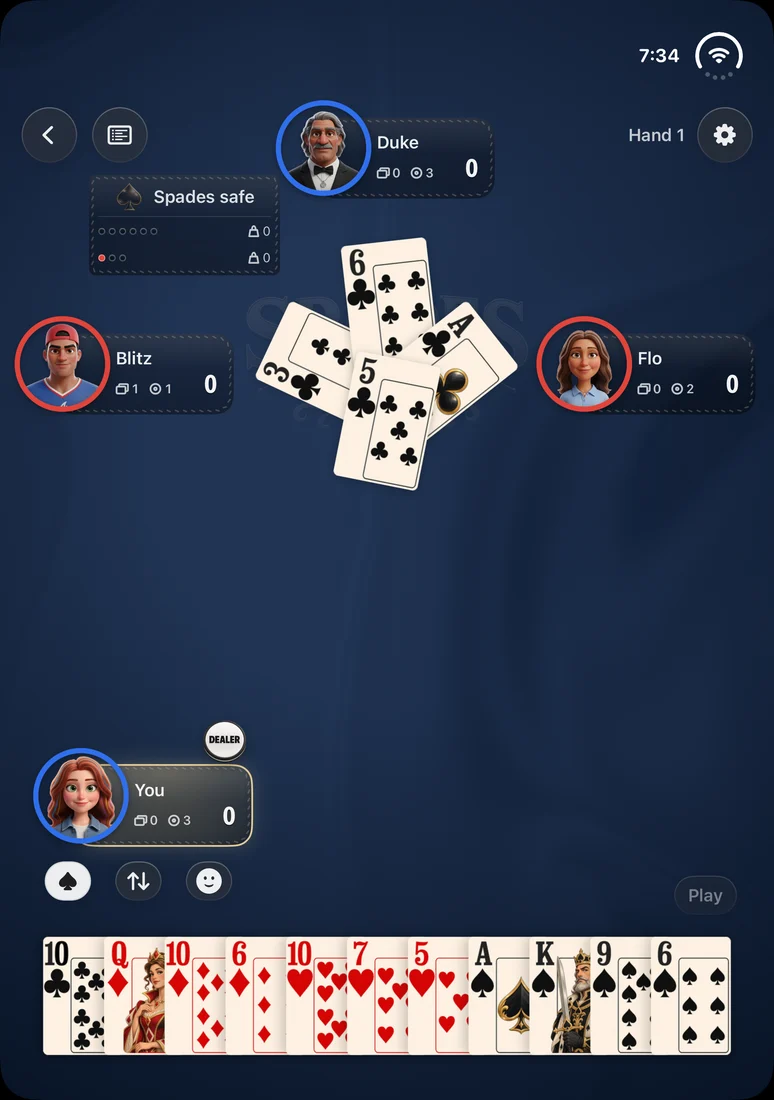
Four players each get thirteen cards. The whole deck is out, with nothing left over. The seat left of the dealer plays the first card.
Before play, everyone bids, starting left of the dealer. Name a number from zero to thirteen; you cannot pass. Your side's two bids may not exceed thirteen together, so if your partner bids thirteen, nil is the only bid left to you. A bid of zero is nil: a promise to take no tricks at all.
The play
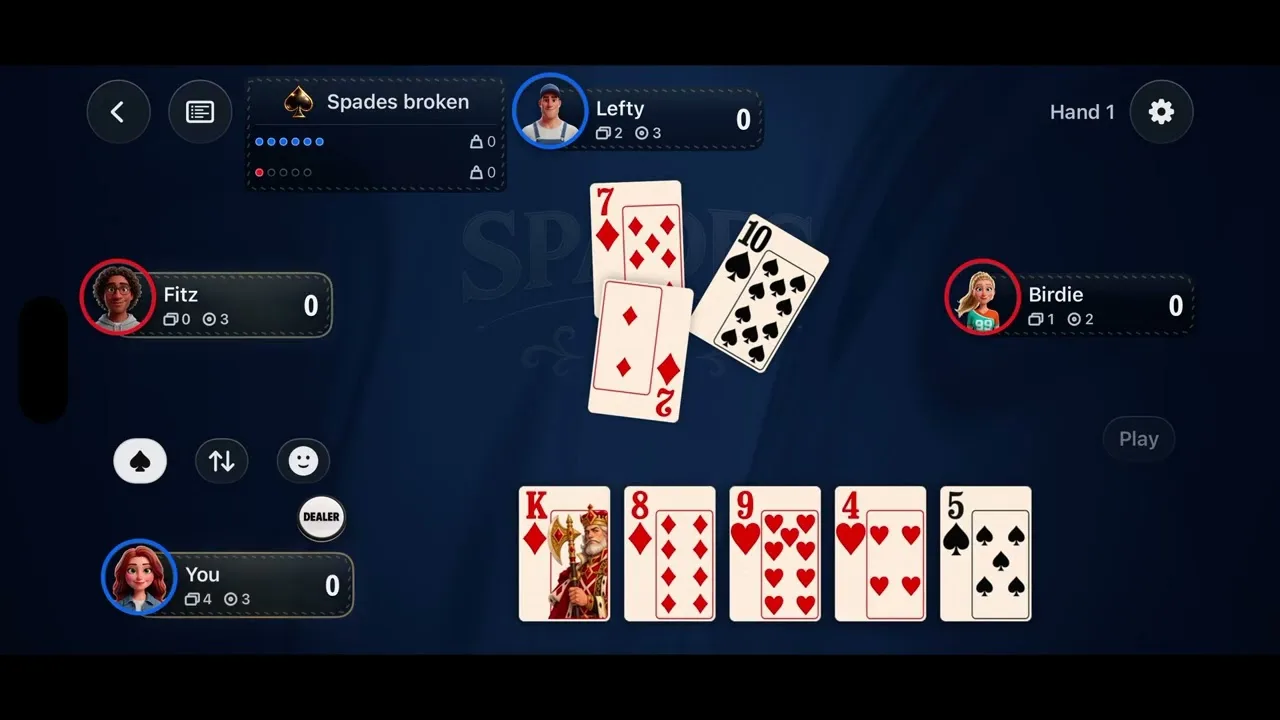
One player leads a card and the other three each play one. You must follow the suit led if you can. The highest card of that suit wins the trick, and its player leads the next one.
If you have none of the suit led, you may play anything, including a spade. Any spade beats any other suit, and the highest spade wins. Trumping is never required. You may throw a card away instead.
You cannot lead a spade until a spade has been played on an earlier trick. The one exception: if spades are all you hold, you may lead one.
Scoring
Make your bid and your side scores ten a trick. Bid four, take five, and the four are worth forty. The extra trick is a bag, worth one point. This hand comes to forty-one. Fall short and you lose ten a trick for the whole bid, not just the shortfall.
A made nil earns your side a hundred points, on top of whatever your partner's bid scores. A failed nil costs a hundred, and every trick the nil bidder took becomes a bag. Your partner's bid is made on their own tricks: tricks a nil bidder takes never count toward it. If both partners bid nil, there is no bid to make, and each nil is scored on its own.
Bags add up from hand to hand. Every ten your side collects costs you a hundred points, and the count starts again from what is left over. Seven bags already and three more here makes ten, so a run of overtricks eventually undoes itself. One big hand can cross ten twice: nine bags carried and twelve more costs two hundred.
Winning
Play hands until a side reaches five hundred points. The higher score wins. If both sides are tied at the top, the game plays on.